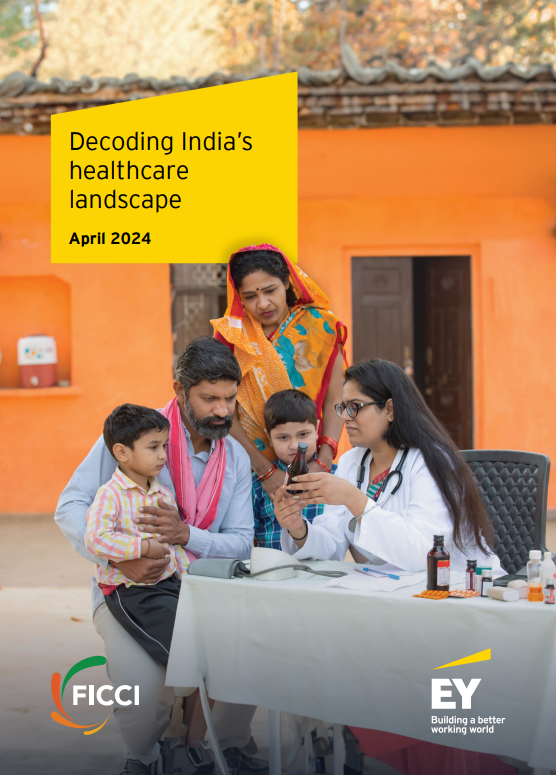
FICCI-EY report - ‘Decoding India’s Healthcare Landscape’
India has made remarkable progress in the healthcare sector, focusing on accessibility, quality, and innovation to pave the way for a healthier and more prosperous future.
Key Achievements:
Healthcare Expenditure: Healthcare spending as a percentage of GDP rose from 0.9% in 2003-04 to 2.1% in 2022-23, with a decrease in Out-of-Pocket Expenditure from 64.2% in 2013-14 to 48.2% in 2018-19, improving accessibility and affordability.
Health Indicators: Significant improvements have been made in infant, maternal, and neonatal mortality rates.
Infrastructure: The number of government hospitals and medical colleges has significantly increased, with the number of medical colleges nearly tripling in two decades and growing at a CAGR of 5.9% since 2014. Public healthcare institutions' share in OPD and IPD services has risen.
Workforce: The number of registered allopathic doctors grew from 660,801 in 2005 to 1,308,009 in 2022. There has been a surge in registered nurses and public health facility utilization.
Pharmaceutical Industry: India ranks third globally in pharmaceutical production, supplying 60% of global vaccines. The industry is projected to reach a market size of $130 billion by 2030.
Medical Value Travel: Medical tourists increased by 10.8% from 2012 to 2022 due to strategic initiatives.
Digital Health: Programs like Ayushman Bharat Digital Mission and e-Sanjeevani have revolutionized healthcare delivery, bridging gaps through digital means.
Bed Capacity: Government hospital bed capacity grew from 470,000 in 2005 to 850,000 in 2021.